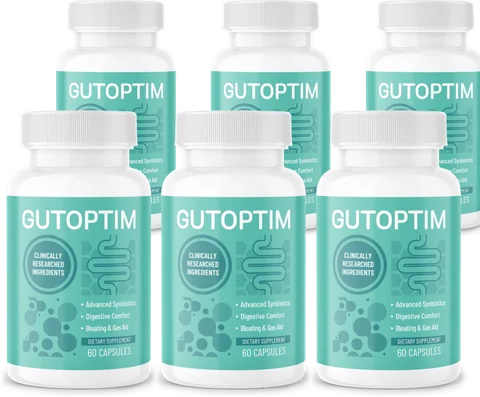
Konjac is a plant whose underground corm is ground into a flour rich in glucomannan, a long-chain plant fiber. In Asian kitchens that flour becomes springy jellies and noodles such as konnyaku and shirataki. Konjac glucomannan is one of the nine ingredients the brand names for GutOptim™.
Meet the konjac plant · From corm to kitchen · Noodles and jelly in everyday cooking · What glucomannan means · Konjac on the GutOptim label
- Konjac (Amorphophallus konjac) grows from an underground corm.
- Glucomannan is a long-chain fiber built from two kinds of sugar units.
- Konnyaku and shirataki are traditional konjac foods in East Asia.
- Konjac glucomannan is one of nine ingredients named on the GutOptim label.
Meet the konjac plant
Konjac, known botanically as Amorphophallus konjac, is a perennial plant native to the warm, humid regions of East and Southeast Asia. Each year it sends up a single, umbrella-like leaf on a tall, mottled stalk, and it is sometimes nicknamed devil's tongue or voodoo lily for its dramatic look.
The part used for food is hidden underground. The plant grows from a corm, a thick, rounded storage organ similar in spirit to a potato, though structurally different. Farmers in Japan, China and nearby countries have cultivated it for centuries, and it takes several seasons to reach a useful size.
Its flower is just as striking: a deep maroon spathe that opens briefly and gives off a pungent scent. Growers usually harvest the corm after two to three years, when it has reached a good size for milling.
From corm to kitchen
Fresh konjac corm is not eaten raw. Traditionally it is peeled, dried and milled into a fine, pale flour. That flour is stirred into water, where it thickens into a smooth paste. A touch of mild alkaline water, historically made with lime or ash, then sets the paste into a firm, elastic gel.
The result is konnyaku, a gray-speckled or white block of jelly with a distinctive bouncy bite. It is simmered in broths, sliced into stews like oden, and served in hot pots across Japan.
The alkaline step is essential to the texture. Without it, the paste stays soft and loose. With it, the gel becomes firm enough to slice, and it holds its shape even in a bubbling pot.
Ready to start your routine?
GutOptim: a daily capsule routine with two capsules daily and a 60-day money-back guarantee.
Order GutOptim NowNoodles and jelly in everyday cooking
Cut that same gel into thin strands and you have shirataki, a name that means white waterfall in Japanese. The strands are translucent and slippery, and they soak up the flavor of whatever sauce they meet. Home cooks use them in several familiar ways:
Because konjac itself tastes mild, the cooking is all about the broth or sauce. Rinsing the packaged strands in cold water before use is a common kitchen habit that softens any mild aroma from the packing liquid.
- Added to sukiyaki and other simmered one-pot dishes
- Tossed with sesame dressing or chilled with a citrus dip
- Stir-fried with vegetables and a savory sauce
- Turned into fruit jellies, a popular dessert in Japan
What glucomannan means
The word glucomannan is chemistry broken into pieces. Gluco- and manno- refer to two kinds of simple sugar building blocks, and the ending -an marks a long chain made of those blocks linked together. So glucomannan is, quite literally, a chain built from two alternating kinds of sugar units.
Chemists call this type of molecule a polysaccharide, and plant fibers like it are common in nature. What sets konjac apart is how much of this particular chain its corm contains, and how it swells into a thick gel when it meets water. That gel-forming nature is what makes konnyaku possible in the first place.
Konjac on the GutOptim label
Konjac glucomannan is one of the nine ingredients the brand names for GutOptim, joining bentonite clay, L. acidophilus, black walnuts, aloe vera, flax seeds, prunes, oats and apple pectin. This article covers plant background, culinary tradition and chemistry only. The brand has not published amounts, so none are stated.
You can see every name in one place on the GutOptim formula page. The What is GutOptim page explains the product basics, including the two-capsules-daily directions with plenty of water. For ingredient reference material, visit the NIH Office of Dietary Supplements, and see the pricing page for pack options.