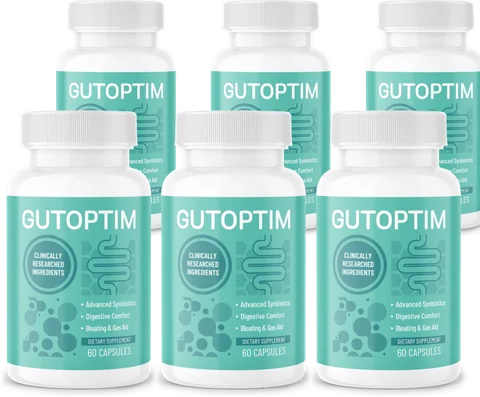
Bentonite is a fine-grained clay that forms when volcanic ash settles into ancient seas and slowly weathers over millions of years. It takes its name from the Benton Shale formation in Wyoming, which itself was named for Fort Benton. It is one of the nine ingredients the brand names on the GutOptim™ label.
A clay born from volcanoes · How it got its name · The signature property: swelling · Where it is found today · Bentonite on the GutOptim label
- Bentonite forms when volcanic ash weathers into clay minerals.
- Its name traces back to Fort Benton and the Benton Shale.
- Its signature property is that it swells noticeably in water.
- It is one of the nine ingredients named on the GutOptim label.
A clay born from volcanoes
Long before anyone bottled it, bentonite began as ash. During the Cretaceous period, powerful eruptions threw clouds of fine volcanic ash into the air, and the ash drifted down into shallow inland seas across what is now the American West. Over tens of millions of years, that ash settled into layers and slowly altered into clay.
The main mineral in most bentonite is montmorillonite, a member of the smectite family. Smectites are made of extremely thin, stacked sheets, and that layered structure explains most of what makes bentonite unusual.
Geologists can even spot ancient eruptions by finding thin bentonite seams buried in rock layers. A pale, slippery band in a cliff face may be the last trace of a volcano that erupted long before humans walked the continent.
How it got its name
The word bentonite dates to the late 1800s. A geologist studying clay beds in Wyoming used the name for a deposit found in the Benton Shale, a rock formation in the region. The Benton Shale, in turn, was named after Fort Benton, an old trading post on the Missouri River in Montana.
So the name is a small chain of place names: a fort, a shale, and finally a clay. It is a nice reminder that many ingredient names are really geography lessons in disguise.
Local history buffs sometimes visit Fort Benton, Montana, which calls itself the Birthplace of Montana. The riverfront town is a fitting origin point for a word that now appears in geology textbooks worldwide.
Ready to start your routine?
GutOptim: a daily capsule routine with two capsules daily and a 60-day money-back guarantee.
Order GutOptim NowThe signature property: swelling
Ask a geologist or a materials scientist what makes bentonite special, and the answer is almost always the same: it swells. Sodium bentonite can take up many times its dry volume in water, turning from a dusty powder into a smooth, thick gel.
That behavior is the reason bentonite turned up in so many everyday settings long before supplements entered the picture:
- Drilling mud, where the thick gel keeps boreholes stable
- Foundry molds, where it binds sand together
- Pond and landfill liners, where it forms a sealing layer
- Clumping cat litter, where it forms firm clusters
- Winemaking, where it is used as a fining agent
Where it is found today
Wyoming remains famous for its bentonite, and the northern Great Plains are home to large deposits. Other regions of the world also have significant beds, because volcanic ash fell and altered into clay in many places over geologic time.
Color varies by deposit. Fresh bentonite can look cream, tan, olive or gray, and the shade usually reflects trace minerals in the surrounding rock rather than anything about its quality.
Because the clay forms in beds, it is typically mined in open pits, dried, and ground into powder of varying fineness. Producers then sort it by grade for the many industries that rely on it.
Bentonite on the GutOptim label
Bentonite clay is one of the nine ingredients the brand names for GutOptim, alongside L. acidophilus, black walnuts, aloe vera, konjac glucomannan, flax seeds, prunes, oats and apple pectin. This article describes only what the clay is and where it comes from. The brand has not published amounts, so none are given here.
To see the full ingredient list in one place, visit the GutOptim formula page. For the bigger picture, the product overview covers the basics. You can also look up ingredient background at the NIH Office of Dietary Supplements.
If you are comparing bottle counts, the pricing page lays out the 1, 3 and 6 bottle packs, each with a 60-day money-back guarantee counted from your purchase date.